
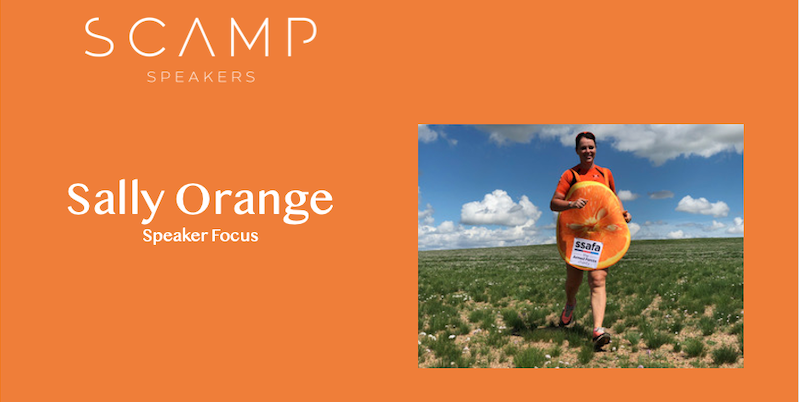
Sally Orange Speaker Focus
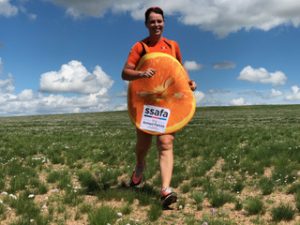 Sally Orange MBE is an endurance runner, adventure athlete & mental health campaigner. She is the only person on the planet to complete a marathon on every continent in fancy dress (as different pieces of fruit!), which gives you a flavour of her colourful personality.
I first worked with Sally back in 2023 and since then she has spoken for us for a number of clients from schools, public sector clients and corporate clients and is always a joy to work with.
She very kindly took some time out to answer some questions for a speaker focus series
Hi Sally, thank you for taking the time to answer some of these questions for us. I know you ran the London Marathon this year raising money for breast cancer awareness (and mental health charities) having had your own cancer diagnosis last year – so my first question is simply how are you?
Thank you for asking. If I’m honest, it’s been quite a rollercoaster, but overall, I’m doing well. Last year, when I was diagnosed with breast cancer, it was a huge shock. Like many people, cancer was something that happened to other people until suddenly it was happening to me. There have certainly been moments of uncertainty, fear and frustration, but there have also been times of gratitude, perspective and incredible kindness from others.
One thing I’ve learned through both my mental health challenges over the years and my recent cancer journey, is that resilience isn’t about being positive all the time. It’s about allowing yourself to have difficult days, asking for help when you need it and continuing to move forward despite the uncertainty.
Running has always helped me process life’s challenges, and having goals to work towards has given me focus during treatment and recovery. I managed to run to all my chemotherapy sessions and even took on a 50km ultramarathon half way through chemo, which I am incredibly proud of.
The support from family, friends, charities and complete strangers has been incredible and I feel extremely fortunate. Combining my fundraising for mental health and breast cancer awareness has given me an even greater sense of purpose. If sharing my story encourages just one person to seek help for their mental health or attend a screening appointment they’ve been putting off, then something positive can come from what has undoubtedly been one of the toughest periods of my life.
Over 80 marathons run – I have to ask you which was the most challenging and secondly which one did you enjoy the most?
That’s a bit like asking me to choose a favourite child! Every marathon has its own story and challenge, whether that’s due the weather, terrain, altitude or simply what was happening in my life at the time.
From a physical and logistical perspective, the World Marathon Challenge was undoubtedly the toughest. The event involved running 7 marathons on 7 continents in 7 days, crossing 16 different time zones in the process. It wasn’t just the running that made it difficult, it was the relentless travel, lack of sleep, changing climates and constant pressure on your body. One moment I was facing the ice and wind of Antarctica, the next I was running in the heat of Australia. It was an incredible experience, but definitely one that tested every ounce of physical and mental resilience I had.
The Marathon des Sables also stands out as another tough one. Covering approximately 250km across the Sahara Desert, over six days, while carrying all your own kit is an incredible test of physical and mental toughness. The heat was relentless and the sand got everywhere and there genuinely were moments where I wondered if I would be able to finish. It was an experience that taught me a lot about myself and what I was truly capable of.
The Everest Marathon was a hugely challenging single marathon. Starting at Everest Base Camp at an altitude of over 5,300 metres meant every step felt hard and that was after spending ten days trekking to get to the start. The scenery was breathtaking, but so was the lack of oxygen! The second time I did this marathon, I had been diagnosed with breast cancer just a few weeks before, so to take it on with cancer is something I am truly proud of as I wasn’t going to let cancer beat me.
As for my favourite, it’s between Antarctica and London. Running a marathon surrounded by glaciers and some of the most spectacular scenery on the planet was an experience I’ll never forget. Completing a marathon on every one of the seven continents, all while dressed as different pieces of fruit, has been a dream that took years to achieve, so crossing the finish line in Antarctica was particularly special. It wasn’t just another marathon, it represented the culmination of a journey that had taken me around the world, raising awareness for mental health, making people smile and proving that even the most ambitious goals can be achieved one step at a time.
London however, is the best marathon in the world. I’ve been lucky enough to have run it 15 times, all for charity and it just gets better every year. The crowds of supporters that line the whole route is such a spectacle and the cheers are deafening, it really is a weekend of London at it’s best.
You have also climbed a number of mountains and swam in the English Channel relay – what would be your next ideal challenge? And most importantly – what bit of fruit is left for you to wear?
I’ve always been drawn to challenges that take me out of my comfort zone and allow me to raise awareness for causes close to my heart. For me, it’s never just about the physical achievement, the challenge becomes a vehicle to start conversations around mental health, resilience and overcoming adversity.
Yes, you’re right, I’ve been fortunate enough to complete some incredible adventures, including swimming the English Channel twice (both as part of a relay team), cycling the length of New Zealand, climbing Island Peak in Nepal and Mt Aconcagua in Argentina, as well as completing the gruelling, Race Across America. This event that is often described as one of the toughest endurance events in the world, with the race covering approximately over 3,000 miles from the west coast of America to the east coast, crossing multiple mountain ranges, vast deserts and changing weather conditions along the way.
Each challenge has taught me something different about determination, teamwork and perspective.
As for what’s next, I still have a long list of adventures I’d love to tackle. There are always new mountains to climb, deserts to cross and endurance events that capture my imagination. For me though, the challenge itself is often less important than the story behind it and the conversations it creates. Watch this space though as I have a fun challenge coming up in October which looks to really put breast cancer on the map.
Regarding fruit costumes, I think people underestimate just how many fruits exist! I’ve been everything from a banana and pineapple to a lemon, lime, and bunch of grapes but there are still plenty left and I’m always on the lookout for more fruit suggestions. I have to admit, I am branching out into vegetables now as well and intend to add to my accolade to being the only person in the world to run a marathon dressed as a piece to fruit, by doing the same with vegetable costumes.
If dressing as a giant fruit and vegetables makes someone smile and gives them the confidence to talk about their mental health, then I will happily keep adding to the fruit bowl.
You had 22 years’ service in the Royal Army Medical Corps including a tour of Afghanistan. What do you feel were the most valuable lessons you learnt from that time?
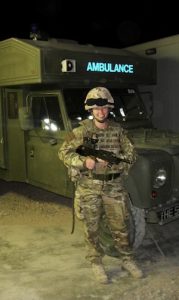 My military career shaped who I am in many ways. I joined the Army because I wanted to help people as a physiotherapist, but what I gained went far beyond professional experience.
The most important lesson was the value of teamwork. In the military, success is never about one individual, and you quickly learn that everyone has a role to play and that the strongest teams are built on trust, communication and mutual respect. Whether deployed on operations or training at home, you rely on the people around you and they rely on you.
I also learned a great deal about leadership. Good leadership isn’t about rank or authority, it’s more about serving others, making difficult decisions when required and creating an environment where people feel valued and supported. Some of the best leaders I worked with led through humility and example rather than command alone.
Perhaps most importantly, my experiences taught me that vulnerability and strength can coexist. For many years I believed I had to be strong all the time, but eventually, when I reached crisis point with my mental health, I realised that genuine strength often comes from acknowledging when you’re struggling and seeking support. That lesson has probably had the biggest impact on my life and is something I share regularly in my talks.
You have faced your own mental health challenges with severe depression and chronic anxiety. What tips would you offer someone to improve their own mental wellbeing?
Firstly, I would encourage people to understand that mental health exists on a spectrum and we all need to look after it in the same way we look after our physical health. Someone doesn’t need to be at crisis point before they start prioritising their wellbeing and I often tell people, ‘you wouldn’t learn to swim in a storm’, to really bring the point home.
One of the most important things we can do is talk, because mental illness thrives in silence. When I was struggling, I spent a long time pretending everything was fine because I was worried about what people might think. Looking back though, opening up was one of the most important steps in my recovery.
I would also encourage people to focus on the basics. Sleep, exercise, nutrition and social connection might sound simple, but they can have a profound impact on how we feel. Regular physical activity has been one of the most effective tools in helping me manage my mental health, although that doesn’t mean everyone needs to run marathons dressed as fruit!
Finding purpose is also incredibly important. Purpose gives us a reason to get out of bed on difficult days. It doesn’t have to be something huge, it can be volunteering, helping others, spending time with family or pursuing a hobby that brings joy.
Finally, be kind to yourself. Life can be challenging and none of us get it right all the time and we need to show ourselves the same compassion we readily offer to others.
What are some of the key messages you deliver in your keynote talks?
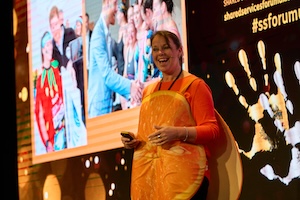 At the heart of my talks is the belief that adversity does not have to define us. We all face challenges, setbacks and periods of self doubt, but those experiences can also become opportunities for growth.
I speak openly about my journey from failing my A levels (twice!) and being rejected from the course I wanted to study at university, not once, but for 6 years in a row. From finally qualifying as a physiotherapist to becoming a British Army Major, to then being medically discharged after 22 years service, due to mental illness. I share how devastating that period was and how, over time, I found purpose through fundraising, endurance sport, helping others and more recently, my cancer diagnosis and how I have handled that. Audiences often connect with the fact that my story isn’t one of constant success, but the fact that it’s a story of failure, setbacks, resilience and learning to start again.
Other key themes include mental health awareness, overcoming fear, embracing vulnerability, resilience, leadership and the importance of purpose. I also talk about the power of humour. Standing on a stage dressed as a giant piece of fruit can break down barriers far more effective than people first realise.
Ultimately, I want audiences to leave feeling inspired but also equipped with practical tools they can apply in their own lives. If people walk away feeling more willing to ask for help, support a colleague or take on a challenge they’ve been avoiding, then I’ve achieved my goal.
You were awarded the MBE for services to charity and mental health in the 2023 King’s Birthday Honours. What was it like to meet the King and receive the medal?
Receiving the MBE was one of the greatest honours of my life and something I never expected to ever happen to someone like me. If I’m completely honest, when I first saw the envelope, I thought I was in trouble with the police as it was so official.
The investiture ceremony at Buckingham Palace was an unforgettable experience, but also a day filled with pride, gratitude and reflection. As I stood there waiting to receive the award, I found myself thinking about all the people who had supported me throughout my journey, and particularly during some of my darkest periods.
I was fortunate to meet The Princess Royal who was incredibly warm, engaging and genuinely interested in hearing about the work I do to raise awareness of mental health through endurance challenges. We spoke briefly about running and fundraising, and it was a conversation I’ll treasure forever.
What made the day even more special was sharing it with my family. My parents have supported me through many difficult periods in my life so being able to celebrate that moment with them meant more than the medal itself.
That said, I still enjoy telling people that MBE stands for “Marathon Babe Extraordinaire”!
Lastly if I (or anyone) were to come and cheer you on at any of the marathons you do – do you have a choice of sweet you’d like us to have ready as you run by? Jelly Baby, Haribo or surely a piece of fruit?
The short answer is yes to all of the above!
Any runner will tell you that when you’ve been on your feet for several hours, almost anything sugary starts looking appealing. Jelly Babies have long been a favourite among marathon runners because they’re easy to eat and provide a quick energy boost and Haribo also tends to go down very well, especially during the latter stages of a race when motivation can start to dip.
That said, I do feel a certain obligation to support the fruit industry as well, with orange segments and bananas being popular choices at races and always go down well.
However, the truth is that the greatest boost isn’t the sweets at all, it’s the people. Seeing supporters lining the course, hearing someone shout your name or spotting a homemade sign can completely transform your day. During a marathon there are always moments when you’re struggling, and a few words of encouragement from a stranger can make an enormous difference.
So bring the Jelly Babies, bring the Haribo and bring the fruit, but most importantly bring your enthusiasm and I promise it will help far more than you realise.
When Life gives you Lemons – Everyone’s Everest – featuring Sally is out soon. Please see the trailer below.