

Richard Gerver Speaker Focus
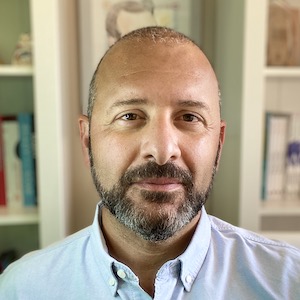 Richard Gerver came to prominence when, as a headteacher he turned around a failing school in the UK in under two years. Winning plaudits globally, Richard was referred to as “The Walt Disney of The Classroom” by the UK media, and went on to win a multitude of international awards including a UNESCO award for leadership and innovation, Global Gurus Top 30 Thinker, and The National Teaching Awards, Headteacher of the Year.
A respected thought leader on Change, Resilience and Leadership, Richard has kindly taken some time out to answer some questions for our Speaker Focus series.
Hi Richard, thank you for taking the time to answer some questions for us. You came to prominence as a headteacher, turning a failing school around. Are you able to give us a brief overview of that journey?
In 2001 I was appointed to the Headship of a failing primary school between the English Midland cities of Derby and Nottingham. The school had been without a substantive leader for nearly two years, due to the incumbent’s serious ill health. Just before I was appointed, the Government felt the school was doing so poorly, they were considering closing it down, firing everyone, hiring a new staff and board, rebranding and then relaunching the school. In short, that didn’t happen. When I first visited the school, I felt that the community was just in need of a sense of vision, empowerment and leadership. I was proved right, because within eighteen months the school had risen to become one of the most talked about in the world, and even won a UNESCO World Education Award for innovation. For me it was and always will be about people. The community in 2001 was scared and exhausted. They felt disenfranchised by constant policy reform, and top-down change. Narrow outcomes had become the only key focus and somewhere along the way, they had lost sight of the vision, values and real purpose of the job… to develop human beings as people and as learners. My job was simply to return those things to the top of the agenda, to reignite that sense of purpose and to enfranchise the community to lead innovatively and with confidence, a new culture that would put our community first; their context and their needs, and to trust that if we focused on those things and the real value of learning, results would come… and they did. Within two years we had gone from being statistically one of the bottom 5% of schools in the UK tests, to the top 5%… more importantly, we had ignited the aspirations and potential in a community that led to a dramatic transformation in our sense of purpose and value. It was a community confident enough to love itself and to believe in extraordinary opportunities.
What were some of the out of the box ideas you came up with to help turn the school around? I recall a story with Asda??
Yes… we created two key new initiatives, firstly to create a sense of purpose for our pupils, many of whom came form challenging family backgrounds where aspiration was limited. To make that happen, we wanted to broaden the horizons of our young people, so we created a town which they were trained to run themselves. We had children between 5 and 11 years old running their own radio station, TV studio, Café, shops, museum and even political system. You can see more here:
Secondly, we wanted our students to see University as a real tangible option, as most saw that as something for other young people… Also, I wanted to give the students some choice in their own learning. So, on Fridays, the children didn’t come to school, they came to Grange University, where they would select two courses from a menu of options run by staff, parents and members of the community. They would study those courses for a half term and then choose two more. Each child kept what we called a career entry profile, which recorded which courses they had taken and what they had learnt on that course (Skills and Knowledge) The options changed regularly but included; contemporary dance, chess, folk music, tennis, advanced mathematics, hair dressing, beauty therapy, pet care, musical theatre, computer programming and pet care.
The Asda story was that I wanted one of our teachers to manage the retail business we wanted to train our children to run and so I sourced a retail management course being run at our local Asda and got him on the weeklong course. I wanted to create opportunities for our staff to broaden their horizons and knowledge and to stimulate their thinking as educators. I also wanted to help them to build the narrative between education and employability. We did similar things with local finance companies, broadcasters like the BBC and other workplaces.
What was morale like in the school and how hard was it to bring the staff along with the plans you had?
When I arrived it was unsurprisingly low, highly qualified and experienced professionals had felt overawed and disenfranchised by years of top-down policy changes, external strategic planning and the sheer weight of change and uncertainty. For me the starting point was always to understand the context of the staff and the wider community, to identify what they cared about and why and then to develop a sense of purpose and empowerment. I set high expectations but did so under what I call an assumption of excellence rather than an assumption of incompetence. I knew that this was a really talented and caring community, and I knew that if we refocused on our core customer, our children, we could fly and we did. I trusted them and they knew it. People came with me because they didn’t feel ‘done to’ they felt like active and valued participants in the evolution. That is one of the reasons I think that our transformation was so dramatic.
This is a real story of practical change in action. In your talks this year – what has in general been the overriding worry from clients they are experiencing in regards to change?
People and organisations are so concerned about the levels of exhaustion, of scepticism and of over-reliance on management and leadership to provide answers. People want the change and uncertainty to die down, whether it’s the exponential rise of AI, the uncertainty of political friction, polarisation and incompetence, the impact of climate change, of global conflicts or simply the ripple effects that all of those things, together with a recent pandemic and global financial crisis have brought to pass. They are worried about siloing and of generational fracture. There is no doubt that we are living in increasingly complex times and people’s personal experiences and lives are also having a profound impact on their anxiety and overriding feeling of disenfranchisement, which is seeing a rise in mental health challenges, anger, despair and even denial. I have said for the two decades I have been engaged in working beyond education, that systems and structures change nothing, people do, and I don’t believe that that has ever been more pertinent than it is now.
You have recently developed a talk around curiosity. Could you explain a little bit about this?
In many ways the new talk is a culmination of my four-decade long career. I have long believed that the ability to deal with change is intrinsically linked to our ability to learn and that both are reliant on our natural born ability to be curious. I remember as a young educator being told that we learn more in the first five years of our lives that the rest of our time on earth, and whilst it’s true we acquire knowledge and skills throughout our lives, when you think about it, in those first five years, most of us learn to walk and talk, we learn about vocal intonation, facial expression and body language, we learn about the sensory world around us and if we are born into multi lingual families, we pick up each language in our orbit. We are learning machines, and why? Because we are so curious, we challenge, we question, surf new experiences and trust our ability to evolve. So the talk explores that idea in the context of our complex lives and suggests strategies and ideas for us as individuals and as organisations to reignite our ability to be curious and use it to help us feel a greater sense of control, of opportunity and productivity in times of profound change, uncertainty, anger, division and anxiety.
A lot of your work is with large corporate clients but obviously you still have passion for education and do a lot of work still on educational events. What are some of challenges Education is facing in this generation of AI?
In many ways, we need to see AI not as the enemy but as the catalyst for meaningful transformation and development. It goes back to my previous answer. AI will, if we work with it constructively, help us to enhance our human capacities. We need to be curious and to embrace opportunity. That is true in the workplace and in education… where if we continue to believe that if we just become more efficient, we will all be ok. That Taylorist idea of industrial thinking is frankly holding us all back. Education needs to find the courage and vision to look beyond what we do now and look towards a more futures focused approach that explores the so-called soft skills of teamwork, problem solving, collaboration, creativity, personal interactions/relationship development and entrepreneurship with greater conviction. Afterall, I believe that ‘soft skills’ are the hard currency of the next hundred years.
You have a new book coming out next year – are you able to tell us a little bit about it?
It’s called How Curiosity Will Save Us All and is based on the new talk I described above. Each chapter explores curiosity across a range of contexts, frames catalyst conversations and ends with a series of practical ideas for implementation and development. It is aimed at individuals and people who are leading and managing teams desperate to find a way to feel more on the front foot.
And lastly, I know you spoken at many events – but what is your most memorable event or venue you have spoken at? Crikey that a tough one, it’s like asking me if I have a favourite child and to both of mine, if you’re reading this, I don’t!
There have been very special moments, places and people. The first time I spoke in Las Vegas was mad, as was taking the TED stage in Brazil and speaking in Pakistan and Saudi.
Sharing a stage with inspirational people like Amal Clooney, Steve Wozniak and President Obama has been pretty, pinch yourself, but I think the most special for me, was giving my first WOBI keynote in Milan because, when I started out doing this, nearly twenty years ago, my dear friend and mentor, Sir Ken Robinson set me that challenge. Sadly, he wasn’t here to see it… but I looked up from the stage, smiled and gave him a wink… job done!