

Phil Olley Speaker Focus
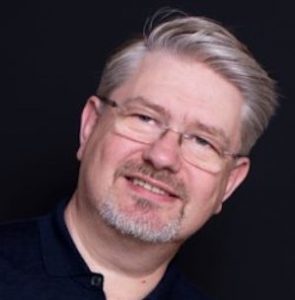 Phil Olley is a sought-after inspirational speaker and international author, who speaks on Self-Leadership, Mental Toughness, High Performance Teams, and Overcoming adversity
I first met Phil shortly after we set up Scamp Speakers and has been one of the supportive speakers we have worked with. Constantly evolving his talks with new ideas, Phil is a trusted coach to many business leaders and he kindly took some time out to answer some of our questions for our speaker Focus series.
Hi Phil, I hope you are well. As I write these questions, we are approaching the summer period, which is a natural bit of downtime for speakers. How has your year been so far and what have you found to be the biggest challenge clients have been facing this year?
It’s been a great first few months of the year from a personal perspective. Much of my work has revolved around working with clients, one-to-one and in small coaching groups, plus doing some in-company strategic growth work with select teams. I find the biggest challenge facing my clients this year is how to stay out of the quagmire of the day-to-day reactivity and “inbox jockeying” to get time to be strategic, to plan, and to proactively focus on achieving specific growth goals.
In addition, many are having to adapt to fresh business challenges, to the political, economic, sociological, and technological changes all around which are resulting in commercial and financial squeezes and big shifts in the work environment. Staying positive and focused on the long-term purpose can be really challenging in a tough business environment and turbulent times.
You started your career in the military; did you find the shift into business after that come naturally easy or was there challenges?
There were definitely challenges, but I always wanted to grow and achieve things personally and professionally. I reflected on those elements of my military life that had shaped my character… the discipline, the military mindset and approach to getting things done, the focus on clear goals, the ability to plan, prepare and organise, and the skills I had acquired in being adaptable in leading through high-risk situations and challenging environments. I have always been well-organised and believe in planning meticulously and this carried me through some difficult times in my early years in sales and running my own business.
The biggest moment in your life probably came when you died. How much can you remember from that moment?
Many people experience something that is so significant that it is etched on the mind as a filter through which everything is viewed. That is certainly the case with my “death experience”. I can remember everything, like it was today. Without giving too much away, when I speak on this episode, I recount it as if it just happened, it is so vivid and clear.
At the time, and in the immediate aftermath, the focus was on what had happened, what to do about it, the practicalities of it all. But I was also acutely aware of the significance of what I had experienced and was processing that – everything I had seen and experienced as I went down into that “white tunnel” moment; the shift it created in my approach to life. I see it very much as a Gift.
This moment in your life had obviously quite a transformational impact on you – not only on a personal level but in a professional level and led to the Nexus Code. Could you explain a little bit about the Nexus Code?
I had always been fascinated by what makes certain people, certain teams, certain businesses and organisations “successful”. What is the difference between those who achieve so much and the rest (the vast majority) who are in a quagmire of endless activity, struggling to make the breakthrough into the “success zone” as I call it.
After the white tunnel experience, that fascination turned to a passion… to discover what success meant for me, what I really wanted to achieve in life, and to find ways to make the changes I knew I wanted to make to make those dreams and wishes a reality. I studied a lot and observed and experienced how to make changes, how to improve, how to adapt, and to grow in my life, career, and business. Whilst learning this for myself, I also wanted to package it to help others.
I wanted to understand more about what works (and why it works) and what doesn’t work … and it’s not what many people think. I mean, it can’t all just be about working harder than anyone else, can it?
In my observations and experiences, I discovered that many myths had grown up in the world of personal development, professional effectiveness, and business growth.
When looking at what the most successful people do, and applying that in my life and business, I found what really does work, what the top 3% of people, teams, and businesses are really doing that makes the difference.
The NEXUS Code developed out of applying the successful patterns, the principles and concepts, the practical tools and strategies for myself and packaging it up into an understandable ‘code’ to help others make the same changes in their own lives, careers, and businesses, to enjoy fresh levels of success and fulfilment.
I recognised certain mindset traits that could be developed. I also recognised that there is one key connection between all the people I coach and who go on to achieve successes beyond their wildest dreams:
- You can only grow your business and your career as much as you grow yourself.
- Your business life can only fulfil its true potential when you fulfil your true potential.
- Your business and career is a manifestation of you… what’s going on in your business life is reflected in what goes on in the rest of your life. And vice-versa.
I also recognised a pattern in those who were successful at making and sustaining changes in all areas of their life. This led to a NEXUS formula for change which is at the core of everything I do. This is based around the value of mindset and the importance of the unconscious/subconscious in making changes happen.
When we spoke the other day we discussed personal fulfilment and I know you speak on increasing fulfilment. Do you think in this modern way of working we are struggling more and more to find that fulfilment?
 People crave significance and personal fulfilment… these are hugely important drivers of everything we do. People want a sense of purpose, of direction, a sense that what they do makes a difference and contributes in some way, as well as achieving goals, and we only get fulfilment when that aligns with personal values.
The challenge of everyday life, personally and professionally, is that in the modern world the demands are continually growing, everything is getting faster, often more complex, and often energy-sapping. People find themselves struggling to balance a number of roles, all with escalating demands on their time and energy. And that speed of change is accelerating massively. Sometimes people tell me when we first meet that they find themselves at the end of a week, a month, a year, wondering where the time went and wondering what it was all for… exhausted!
And yet, it doesn’t have to be that way.
At the heart of the NEXUS code is a model around three spheres of fulfilment (like a simple Venn diagram), combining what I see as the three arenas in which we can find fulfilment. True success is where these intersect.
In my book, “Reflections from the White Tunnel”, (see above image) I describe the Ten Fulfilments that I have observed that are always present when people feel personally fulfilled, and at times when they are able to perform their best work and live at their very best. Some of my clients refer to these as “Ful-Phil-ments!” These are things such as feeling valuable, personally responsible, being energised, and being in a flow of alignment so that results seem to come effortlessly.
One growth area in terms of speaking topics we have received is around Self-Leadership. For those who don’t know what this is – would you be able to explain a little bit about Self-leadership
Self-leadership is about developing those attributes that are essential for creating a fulfilled life for oneself.
So, for example, having clear values and a sense of purpose, of personal responsibility for your outcomes and successes, clear direction, a positive growth mindset, and high personal and professional standards, integrity in its true sense, are fundamental to self-leadership, success and fulfilment in life and business. Having clear goals, allocating your resources to achieve them, and being focused and maintaining that focus in your daily activities are all elements of self-leadership.
It dismays me a little to see that much of what is written and spoken about in the realm of leadership is how to use certain tools and techniques to become a better leader.
But great leadership is not about using tools and techniques, skills which are tacked onto the outside. It is about leading from within.
The most successful leaders are very “follow-able”. First and foremost, they are great leaders of themselves.
Thomas J Watson (businessman and former CEO of IBM) famously said: “Nothing so proves a man’s ability to lead, as what he does form day to day to lead himself.” (or herself, I should add).
Great leadership is about self-leadership, being a person who is worth following. Being followable is a fundamental principle that is at the core of the work I do with leaders. It’s about some foundational characteristics, not just about a role or a position you have been put in as “the leader” or about some communication skills or other leadership skills that you are trying to use.
It’s about having the leadership mindset. This creates authenticity and brings genuine integrity to the fore… not as leadership add-ons, but at the very centre of an individual’s leadership style.
And finally, I have touched upon it already, the summer is upon us, is there any good tips you would suggest to help us switch off from work during this quieter time.
Yes! Certainly people need to be able to set boundaries. Modern gadgetry makes work and business life seep into our ‘time off’ like never before. It’s important to set the expectations for those around you, and especially colleagues.
It’s a tragic irony that many people spend their lives wishing they were elsewhere, and having their attention constantly dragged elsewhere.
So when people are “off” they often spend time and attention thinking about all the things they should and could be doing at work or in their business. And when people are at work or in their business, they are thinking about all the things they’d like to be doing at home; all the people they wished they could spend more time with.
It’s a trap. Better to be fully present, always.
One thing I always do at the end of a break, or a holiday, is have a period of transition back to business rather than just jumping back in at the deep end. I advise all my clients to set aside some strategic time to set new goals, refresh their long-term missions, to plan, organise, get focused for the remainder of the year, and beyond. That time working on your business pays huge dividends.
Knowing that I have that transition day set aside definitely removes pressure when I return from a break. This enables me to relax when I’m ‘off’ too. Good luck!
If you interested in working with Phil on your event please contact us on 020 8854 7247 or email enquiries@scampspeakers.co.uk